TIX4 Platform Redesign

OVERVIEW

Led the UX and visual redesign of core discovery and booking flows for a high-traffic Las Vegas ticketing platform. The project focused on improving homepage hierarchy, restructuring the event booking experience, and reducing friction between discovery and purchase.

YEAR

2026

ROLE

Role: Senior Designer

  • Scope: UX Strategy, Information Architecture, Visual Design

  • Platform: Web

  • Status: Implemented & Live

SERVICES

UX Strategy
Information Architecture
Interaction Design
Visual Design
Conversion Optimization

About the project

Context

TIX4 is a Las Vegas entertainment ticketing platform focused on show discovery and direct booking. The homepage serves as the primary discovery surface, while the event page drives conversion through date and time selection.

While the platform was functionally complete, the browsing and booking experience lacked structural cohesion and modern UX clarity.

This redesign addressed both surfaces as a connected system rather than isolated pages.

The Challenge:

Homepage

The original homepage presented strong promotional content but lacked clear visual hierarchy. Multiple deal sections competed for attention, promotional blocks carried equal visual weight, and discovery felt fragmented rather than guided.

Key issues included:

  • Competing promotional zones with similar emphasis

  • High content density and visual noise

  • Limited narrative flow from discovery to action

  • Inconsistent card hierarchy and spacing

The result was cognitive overload during initial browsing.

Event Page

The event page contained all necessary information, but the booking interface was visually secondary to descriptive content. Users had to parse dense information blocks before reaching key actions.

Primary friction points:

  • Booking controls lacked prominence

  • Date and time selection felt secondary

  • Pricing and urgency cues were disconnected

  • Informational density increased decision fatigue

  • Scanning required excessive visual effort

The page functioned, but it did not optimize for fast decision making.

Strategic Approach

I approached this redesign as a connected discovery-to-conversion system:

  1. Clarify discovery (Homepage)

  2. Improve evaluation clarity (Event page)

  3. Elevate booking actions (Date & Time selection)

  4. Reinforce urgency and trust signals

The goal was to reduce cognitive load while accelerating user commitment.

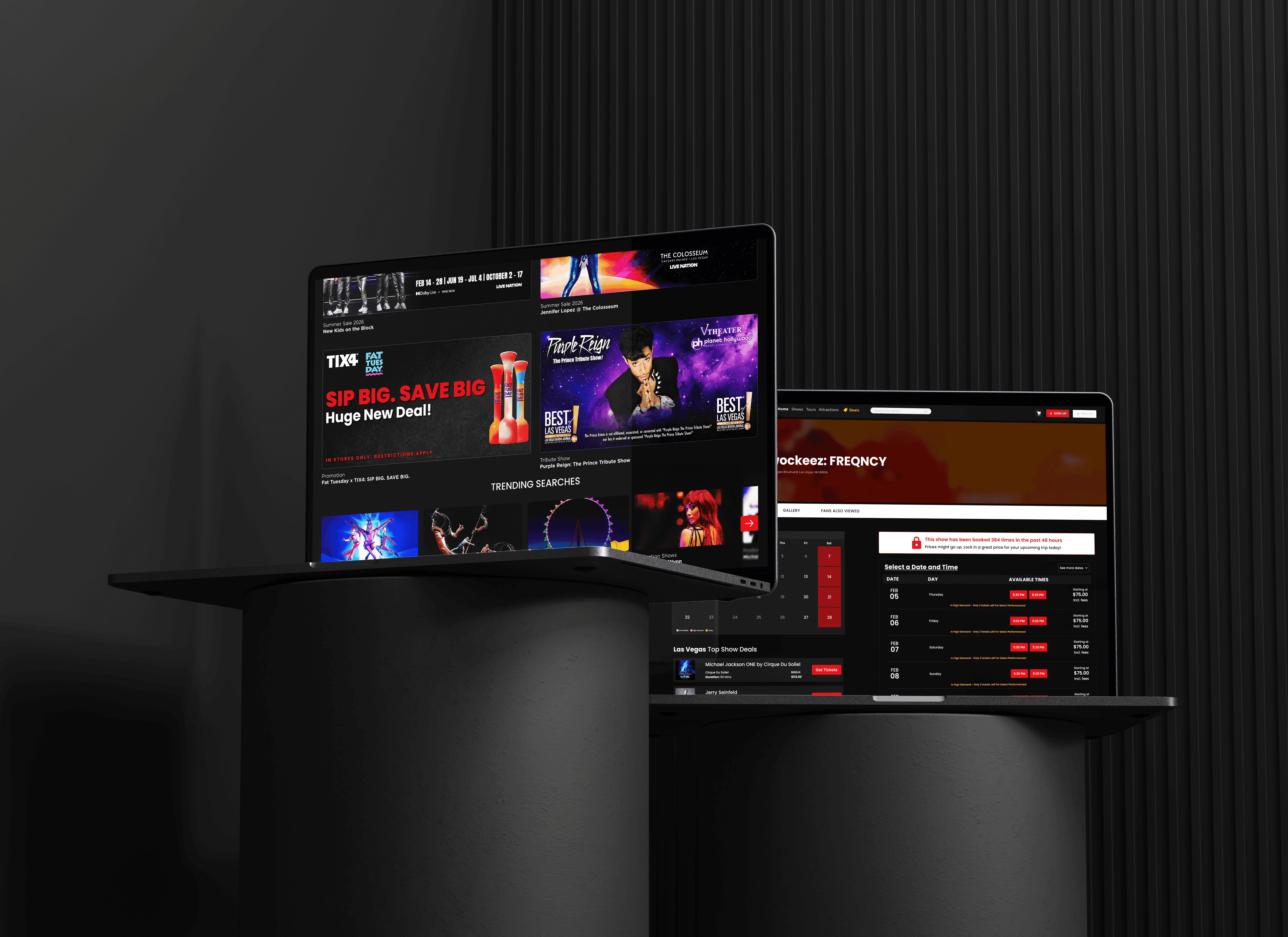
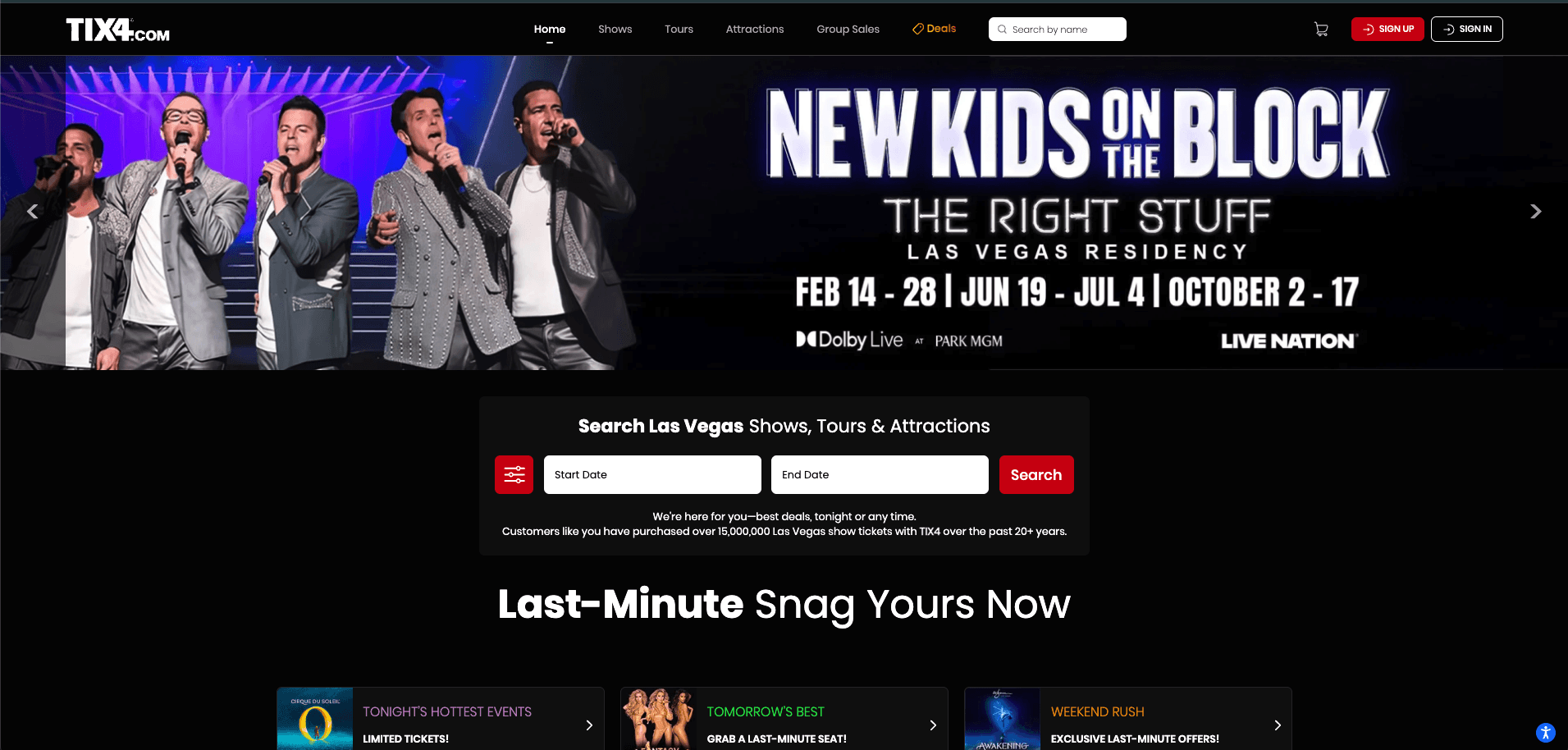
Homepage Redesign

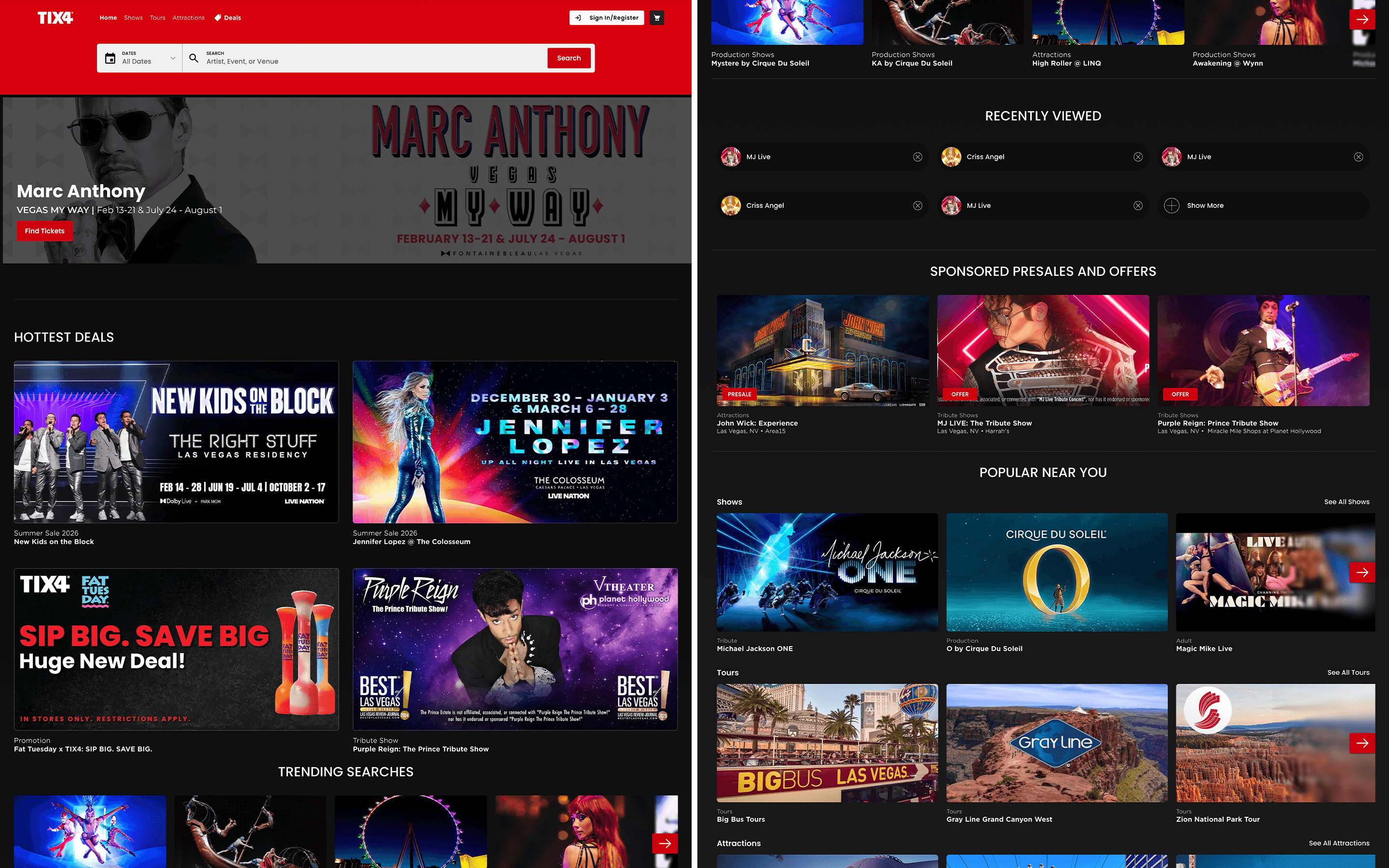
The homepage was restructured to create progressive hierarchy rather than stacked promotional weight.

Improvements included:

  • Clear section prioritization

  • Structured promotional grouping

  • Simplified card system

  • Increased spacing rhythm

  • Stronger visual flow from hero to deals to categories

Promotions were integrated into a guided browsing structure instead of interrupting the user journey.

The result is a cleaner, more modern entertainment platform aesthetic aligned with contemporary ticketing experiences.

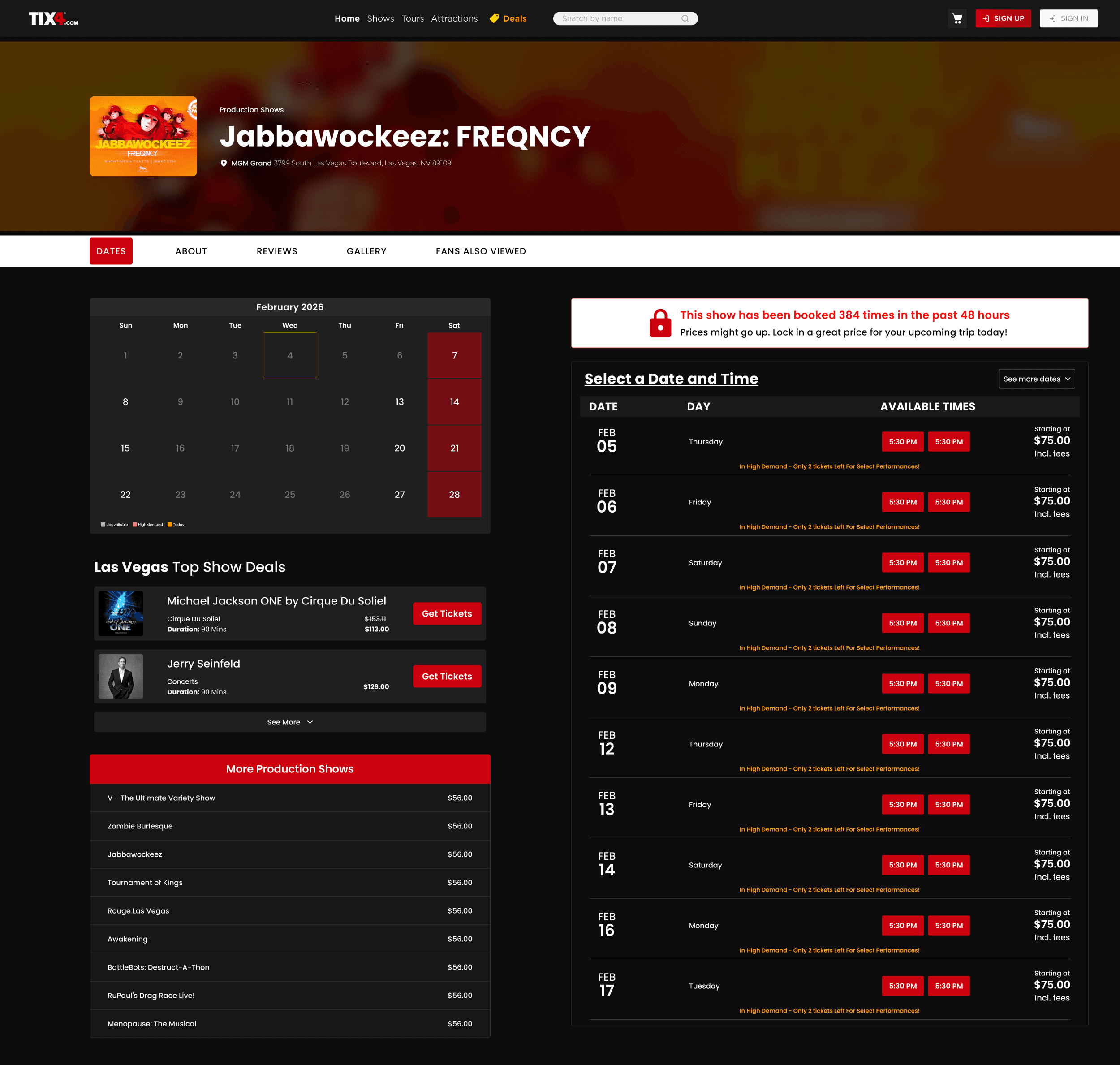
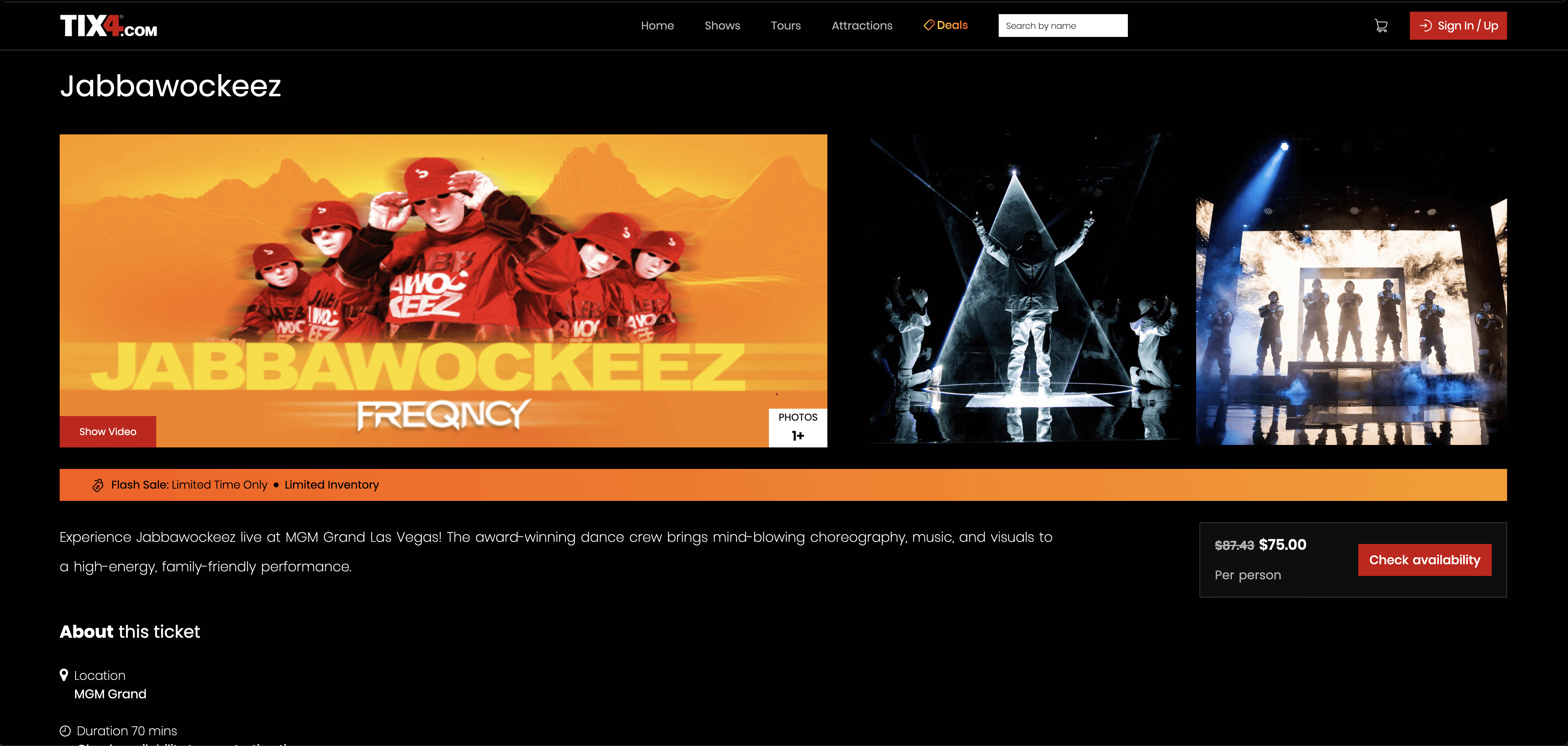
Event Page Redesign

Repositioning the Booking Interface

The booking interface was elevated to become the primary action driver.

Enhancements include:

  • Prominent calendar-based date selection

  • Scannable time slot layout

  • Integrated per-date pricing visibility

  • Urgency messaging (“Booked X times”)

  • Clear demand indicators

This restructuring reduced mental parsing and made availability decisions immediate.

Structured Content Tabs

Content was reorganized into modular tabs (Dates, About, Reviews, Gallery, Fans Also Viewed), reducing scroll fatigue and improving content chunking.

This created predictable interaction patterns while preserving necessary detail.

Visual & Emotional Alignment

Media presentation was refined to support emotional engagement before purchase. Hero imagery and gallery layouts reinforce show identity while maintaining visual consistency across the platform.

Impact

The redesign improved clarity across both discovery and booking flows. Key improvements include:

  • Reduced cognitive load

  • Clearer hierarchy between content and action

  • Stronger urgency signaling

  • Faster scanning and decision clarity

  • Elevated brand perception

The redesigned experience aligns more closely with modern ticketing UX standards while maintaining business priorities.

Reflection

This project focused on aligning visual design with user decision psychology. By restructuring hierarchy and elevating booking interactions, the platform now supports a more intuitive transition from exploration to commitment.
Smooth Scroll
This will hide itself!

TIX4 Platform Redesign

OVERVIEW

Led the UX and visual redesign of core discovery and booking flows for a high-traffic Las Vegas ticketing platform. The project focused on improving homepage hierarchy, restructuring the event booking experience, and reducing friction between discovery and purchase.

YEAR

2026

ROLE

Role: Senior Designer

  • Scope: UX Strategy, Information Architecture, Visual Design

  • Platform: Web

  • Status: Implemented & Live

SERVICES

UX Strategy
Information Architecture
Interaction Design
Visual Design
Conversion Optimization

About the project

Context

TIX4 is a Las Vegas entertainment ticketing platform focused on show discovery and direct booking. The homepage serves as the primary discovery surface, while the event page drives conversion through date and time selection.

While the platform was functionally complete, the browsing and booking experience lacked structural cohesion and modern UX clarity.

This redesign addressed both surfaces as a connected system rather than isolated pages.

The Challenge:

Homepage

The original homepage presented strong promotional content but lacked clear visual hierarchy. Multiple deal sections competed for attention, promotional blocks carried equal visual weight, and discovery felt fragmented rather than guided.

Key issues included:

  • Competing promotional zones with similar emphasis

  • High content density and visual noise

  • Limited narrative flow from discovery to action

  • Inconsistent card hierarchy and spacing

The result was cognitive overload during initial browsing.

Event Page

The event page contained all necessary information, but the booking interface was visually secondary to descriptive content. Users had to parse dense information blocks before reaching key actions.

Primary friction points:

  • Booking controls lacked prominence

  • Date and time selection felt secondary

  • Pricing and urgency cues were disconnected

  • Informational density increased decision fatigue

  • Scanning required excessive visual effort

The page functioned, but it did not optimize for fast decision making.

Strategic Approach

I approached this redesign as a connected discovery-to-conversion system:

  1. Clarify discovery (Homepage)

  2. Improve evaluation clarity (Event page)

  3. Elevate booking actions (Date & Time selection)

  4. Reinforce urgency and trust signals

The goal was to reduce cognitive load while accelerating user commitment.

Homepage Redesign

The homepage was restructured to create progressive hierarchy rather than stacked promotional weight.

Improvements included:

  • Clear section prioritization

  • Structured promotional grouping

  • Simplified card system

  • Increased spacing rhythm

  • Stronger visual flow from hero to deals to categories

Promotions were integrated into a guided browsing structure instead of interrupting the user journey.

The result is a cleaner, more modern entertainment platform aesthetic aligned with contemporary ticketing experiences.

Event Page Redesign

Repositioning the Booking Interface

The booking interface was elevated to become the primary action driver.

Enhancements include:

  • Prominent calendar-based date selection

  • Scannable time slot layout

  • Integrated per-date pricing visibility

  • Urgency messaging (“Booked X times”)

  • Clear demand indicators

This restructuring reduced mental parsing and made availability decisions immediate.

Structured Content Tabs

Content was reorganized into modular tabs (Dates, About, Reviews, Gallery, Fans Also Viewed), reducing scroll fatigue and improving content chunking.

This created predictable interaction patterns while preserving necessary detail.

Visual & Emotional Alignment

Media presentation was refined to support emotional engagement before purchase. Hero imagery and gallery layouts reinforce show identity while maintaining visual consistency across the platform.

Impact

The redesign improved clarity across both discovery and booking flows. Key improvements include:

  • Reduced cognitive load

  • Clearer hierarchy between content and action

  • Stronger urgency signaling

  • Faster scanning and decision clarity

  • Elevated brand perception

The redesigned experience aligns more closely with modern ticketing UX standards while maintaining business priorities.

Reflection

This project focused on aligning visual design with user decision psychology. By restructuring hierarchy and elevating booking interactions, the platform now supports a more intuitive transition from exploration to commitment.
Smooth Scroll
This will hide itself!

TIX4 Platform Redesign

OVERVIEW

Led the UX and visual redesign of core discovery and booking flows for a high-traffic Las Vegas ticketing platform. The project focused on improving homepage hierarchy, restructuring the event booking experience, and reducing friction between discovery and purchase.

YEAR

2026

ROLE

Role: Senior Designer

  • Scope: UX Strategy, Information Architecture, Visual Design

  • Platform: Web

  • Status: Implemented & Live

SERVICES

UX Strategy
Information Architecture
Interaction Design
Visual Design
Conversion Optimization

About the project

Context

TIX4 is a Las Vegas entertainment ticketing platform focused on show discovery and direct booking. The homepage serves as the primary discovery surface, while the event page drives conversion through date and time selection.

While the platform was functionally complete, the browsing and booking experience lacked structural cohesion and modern UX clarity.

This redesign addressed both surfaces as a connected system rather than isolated pages.

The Challenge:

Homepage

The original homepage presented strong promotional content but lacked clear visual hierarchy. Multiple deal sections competed for attention, promotional blocks carried equal visual weight, and discovery felt fragmented rather than guided.

Key issues included:

  • Competing promotional zones with similar emphasis

  • High content density and visual noise

  • Limited narrative flow from discovery to action

  • Inconsistent card hierarchy and spacing

The result was cognitive overload during initial browsing.

Event Page

The event page contained all necessary information, but the booking interface was visually secondary to descriptive content. Users had to parse dense information blocks before reaching key actions.

Primary friction points:

  • Booking controls lacked prominence

  • Date and time selection felt secondary

  • Pricing and urgency cues were disconnected

  • Informational density increased decision fatigue

  • Scanning required excessive visual effort

The page functioned, but it did not optimize for fast decision making.

Strategic Approach

I approached this redesign as a connected discovery-to-conversion system:

  1. Clarify discovery (Homepage)

  2. Improve evaluation clarity (Event page)

  3. Elevate booking actions (Date & Time selection)

  4. Reinforce urgency and trust signals

The goal was to reduce cognitive load while accelerating user commitment.

Homepage Redesign

The homepage was restructured to create progressive hierarchy rather than stacked promotional weight.

Improvements included:

  • Clear section prioritization

  • Structured promotional grouping

  • Simplified card system

  • Increased spacing rhythm

  • Stronger visual flow from hero to deals to categories

Promotions were integrated into a guided browsing structure instead of interrupting the user journey.

The result is a cleaner, more modern entertainment platform aesthetic aligned with contemporary ticketing experiences.

Event Page Redesign

Repositioning the Booking Interface

The booking interface was elevated to become the primary action driver.

Enhancements include:

  • Prominent calendar-based date selection

  • Scannable time slot layout

  • Integrated per-date pricing visibility

  • Urgency messaging (“Booked X times”)

  • Clear demand indicators

This restructuring reduced mental parsing and made availability decisions immediate.

Structured Content Tabs

Content was reorganized into modular tabs (Dates, About, Reviews, Gallery, Fans Also Viewed), reducing scroll fatigue and improving content chunking.

This created predictable interaction patterns while preserving necessary detail.

Visual & Emotional Alignment

Media presentation was refined to support emotional engagement before purchase. Hero imagery and gallery layouts reinforce show identity while maintaining visual consistency across the platform.

Impact

The redesign improved clarity across both discovery and booking flows. Key improvements include:

  • Reduced cognitive load

  • Clearer hierarchy between content and action

  • Stronger urgency signaling

  • Faster scanning and decision clarity

  • Elevated brand perception

The redesigned experience aligns more closely with modern ticketing UX standards while maintaining business priorities.

Reflection

This project focused on aligning visual design with user decision psychology. By restructuring hierarchy and elevating booking interactions, the platform now supports a more intuitive transition from exploration to commitment.
Smooth Scroll
This will hide itself!